Mayor Kim Norton Will Not Veto Approved Add-on to Historic Downtown Rochester Buildings
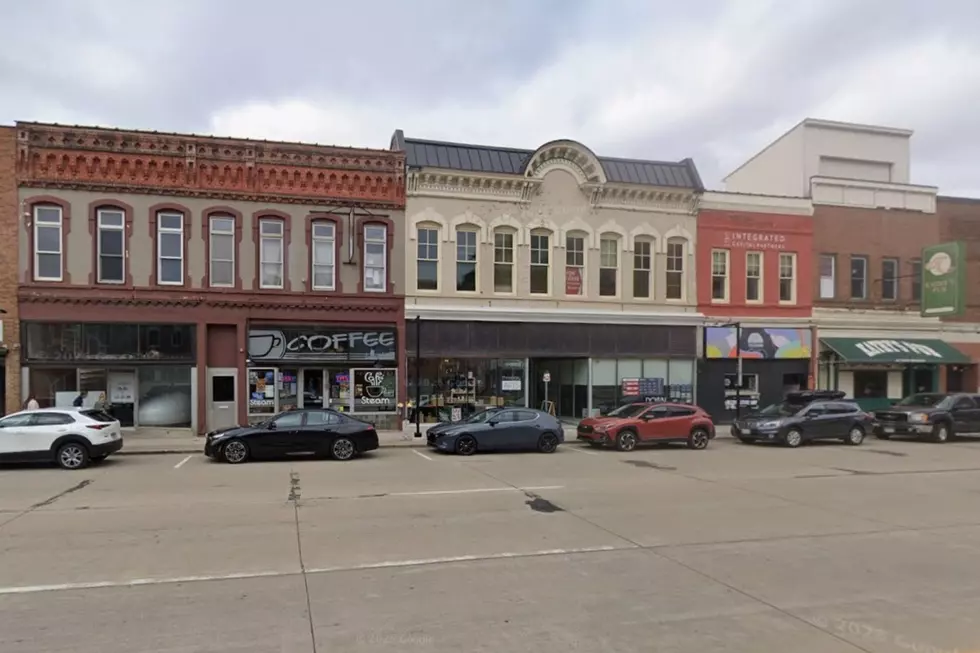
Rochester, MN (KROC-AM News)- Mayor Kim Norton has announced that she will not veto an addition above five historic buildings in downtown Rochester.
Read More: Rochester City Council Overturns Denial of Historic Buildings Addition in Downtown Rochester
Last week, the Rochester City Council voted 4-3 to approve a proposal from local developer Hal Henderson to construct a seven story addition to the historic buildings in the 300 block of South Broadway Ave.

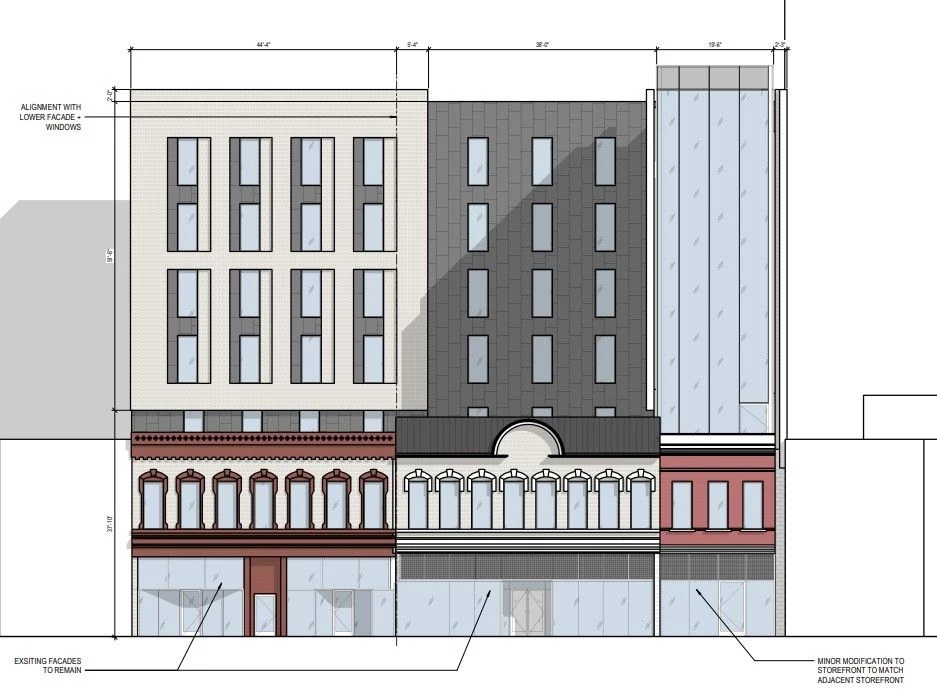
The renderings indicate the addition would rise five stories above the current roofline and would include 35 "tower units" and eight renovated housing units.
The new structure would be located as far as 80 feet away from South Broadway Ave. and as close as 40 feet away from the busy street.
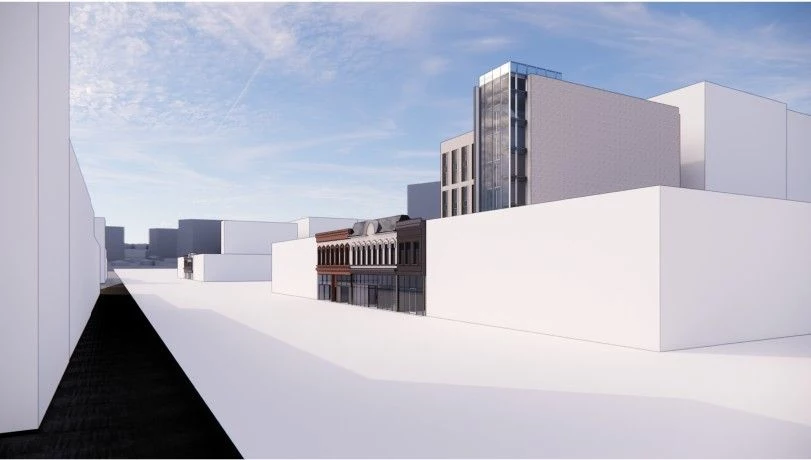
Also included in the plans are a conversion of the entrance to the 309 building, currently Treedom, into a two-story lobby while maintaining the current facade and the addition of a two-story covered courtyard for tenants in the back lot of the buildings.
The council’s vote overturned an earlier 6-2 decision by the Rochester Heritage Preservation Commission (HPC) to deny issuing a certificate of appropriateness that was needed for the addition to move forward.
Read More: Rochester HPC Rejects Proposed 7-Story Addition to Historic Downtown Buildings
City staff recommended both the HPC and City Council approve the housing development.
Prior to the elected leader’s vote, more than 40 people testified against the addition.
After the vote a petition urging Mayor Norton to veto the council’s decision to overturn the HPC’s denial was launched. The petition had received more than 3500 signatures as of Monday afternoon.
Monday was the deadline for Mayor Norton to decide whether or not to issue the veto. Had she vetoed the measure, the addition would’ve been rejected unless one of the three councilmembers who sided with the heritage preservation commission changed their vote.
Mayor Kim Norton Explains Decision Not to Veto Addition to Historic Buildings in Downtown Rochester
In a statement announcing her decision, Mayor Norton wrote in part, “Please know that this was not done without considerable thought. Your advocacy was impressive and the passion for our community’s history, arts culture, and “third spaces” shined bright. Thank you for bringing that to light. I know I have disappointed many in our community and for that I am deeply sorry.”
The Mayor’s full statement, which includes an explanation as to how she reached her conclusion is available below.
Mr. Henderson came before the City Council in May of 2025. That, similar to the situation today, was after the Heritage Preservation Commission (HPC) denied a Certificate of Appropriateness (COA) for a somewhat differently scoped project on much of this same area. At that time, he was also asking the City Council to overturn the HPC denial. That appeal was denied by the City Council. Mr. Henderson’s application to remove the 209 Broadway property from the historic district was submitted and was denied by City Council. My recollection was that Mr. Henderson and Mr. Michaletz were told by the City Council, and subsequently by our staff, to bring back something that had further setbacks, a shorter tower and that complied with the 10 Standards. It is my understanding that he has been working with staff to modify the request to reflect the advice they were provided and those changes are reflected in the G.1. proposal which includes further setbacks from the historic storefronts and Broadway, a smaller 7-story tower, and preserves the facade of 209 and the facades and storefronts of 311-317 buildings.
In the most recent process, Molly Patterson Lundgren, the City’s specialist in historic preservation working with Irene Woodward, the Director of Community Development, presented their review and advice to the HPC that the project addressed the City Council’s concerns and met the 10 Standards. The HPC voted 6-2 to not support this recommendation and chose to deny the request. I do believe the HPC, an advisory committee to the City Council, gave serious consideration to the project and had a thorough discussion. While they may not have provided written rationale of the specific Secretary of Interior Standards that they disagreed with and perhaps more evidence should have been offered, it does not negate the effort and thought that went into their work. It’s worth noting that, despite the strong feelings many have about the standards, it is possible to look at the 10 standards and come away with different conclusions. It’s fair to say that the standards are written in a way that has some subjectivity and flexibility in them, so it’s not surprising that there are differences and sometimes confusion during the deliberations. The flexibility and subjectivity allow for some consideration and creativity that might keep a historic building or district intact and usable - because the last thing one would want is a vacant historic building or district that sits unused and falls into disrepair.The applicants appealed the HPC ruling and it was brought before the elected governing body, the City Council, last week. The City Council took up the issue on August 17th and had a thorough discussion about how the project aligns with our locally designated historic district and whether the 10 Standards were met. It’s worth noting that in both bodies - people of good faith and sincere interest - came up with differing opinions on the interpretation of the Standards as they relate to our local historic district and stated expectations. Their 4-3 vote in favor of over-turning the HPC decision allows the project to move forward.
The recent City Council meeting was well attended and over 40 members of the public speaking passionately about their love of the downtown arts district, the historic district, and the need for “third
spaces” - especially for our students and younger residents. You could not listen to the testimony and not be moved by the stories and speeches. I share their strong support for the creation of the Historic District, the arts, and of the great “third spaces” that have been developed along that section of Broadway and think we can and must have all of that! Since that meeting, many members of the public have requested that I consider vetoing the City Council’s 4-3 decision on last week’s agenda item G.1. which overturned the HPC’s denial of the COA for the development on Broadway of the 309 -317 buildings. I have given that much thought.
Outcome
This matter presented a quasi-judicial decision for the City Council. The Council considered the entire record before them, heard extensively from the community, staff, and the developer through the public hearing, and they had a robust discussion of the applicable criteria. While I may not agree with all the arguments that the majority made in favor of approval, I believe their discussion was thoughtful and focused on the legally relevant criteria. My decision is heavily influenced by the integrity of the process and that, agree or disagree, the process and the decision are legally defensible. I also believe that allowing the majority vote to stand keeps the historic integrity of the district by meeting the Standards as discussed and debated.
It is also important for me to say that I do not view the Council’s majority decision as an afront to the Heritage Preservation Commission (HPC), or to the people who spoke at the hearing. The process we have created will naturally lead to times when an advisory commission and the elected body, the City Council, may disagree. The work and input of Boards and Commissions is very important, of course, and I have always encouraged the Council to take that input seriously. And likewise, I encourage those serving on Boards and Commissions to be respectful of the role and the decisions of the Council.
Additionally, I have had assurances from Mr. Henderson and Mr. Michaletz that they intend to continue to rent to the arts organizations at as reasonable a rent as possible and that they believe this project will allow them to do that into the future. The proposal leaves multiple current tenants and keeps first floor business spaces intact - although a notable exception is the Treedome business which will need to be relocated - and seeks to create apartment spaces in the upper-back portions of the property without dislocating the main floor businesses. This type of adaptive reuse and addition that is “compatible, but distinct” is difficult to achieve, but every attempt has been made to do so while keeping the building as it’s currently used and while remaining financially viable. The argument could be made that if we do not support appropriate adaptive reuses that a financial hardship case could be made that might lead to demolition or removal from the district and I believe we all want to avoid that. The proposed additions seek to complement the historic structure and are distanced nicely from the current historic facades. It is my hope that the final product will seek to blend with the 318 Commons building in the background and compliment the current historic structures below it so as not to disrupt, but rather preserve, the streetscape.
For these reasons I have allowed G.1. to pass into law. Please know that this was not done without considerable thought. Your advocacy was impressive and the passion for our community’s history, arts culture, and “third spaces” shined bright. Thank you for bringing that to light. I know I have disappointed many in our community and for that I am deeply sorry.
-Kim Norton, Mayor of Rochester
TIME TRAVEL! Take a trip back to Downtown Rochester in 2005
Gallery Credit: Andy Brownell
More From KROC-AM